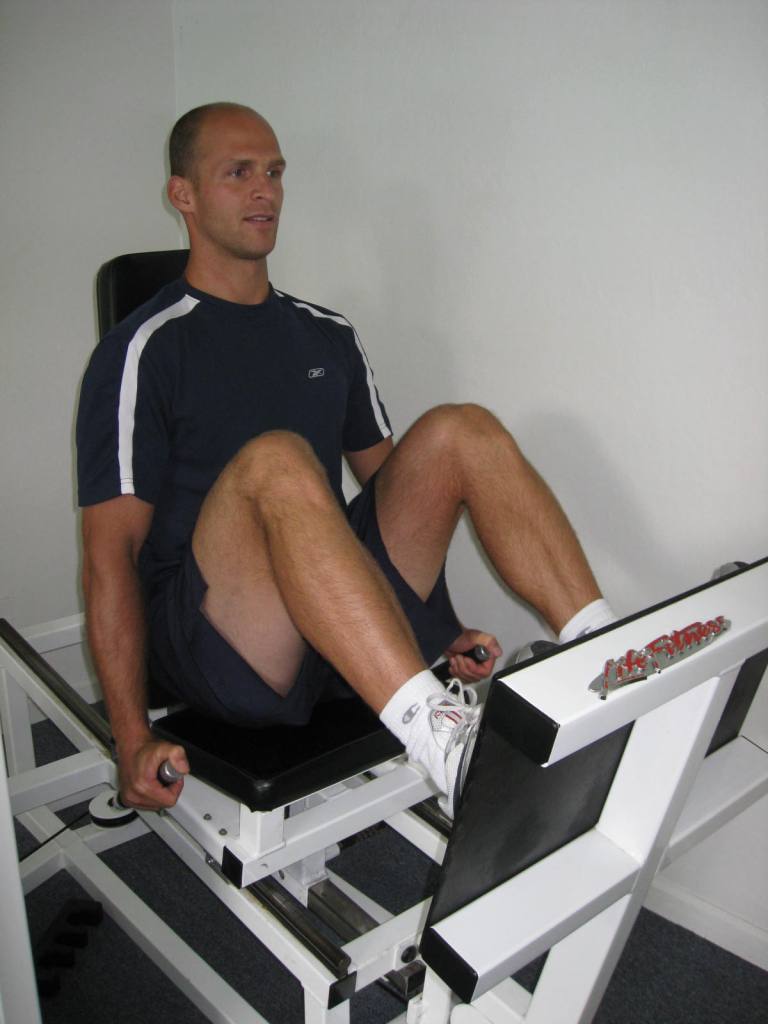
Intensive strength training has a bigger effect on metabolism – calorie burn and weight loss than endurance exercise.
Intensity is the most important factor determining post-workout metabolism, so the harder you work in the gym or on the beach the more calories your body will burn afterward.
People who intensively strength train achieve so called – post-workout fat oxidation. “Fat oxidation” is what happens when your body uses oxygen and fat cells to turn into energy.
Yes you burn more calories while you do your aerobic workout for an hour than lifting weights for an hour, but 13 hours after the intensive weight workout, the men and women are burning 20% more fat than they did 13 hours after the aerobic workout.
You would’ve need to burn twice as many calories during your aerobic workout, to reach the level of post-workout fat oxidation achieved by weight lifting.
Even if evidences show, that weight lifting is more effective to loose fat, you shouldn’t forget your aerobic exercise. Aerobic exercise is a part of well balanced exercise program that improves your cardiovascular system and keeps your heart healthy, plus it also burns a lot of calories too.
To achieve better strength, health and performance, you need to train at the threshold of intensity.
For example when doing 3 sets of 15 repetitions per exercise:
in the 1st set adjust the load, so you are able to finish15R – repetitions with correct technique, with little difficulty, but it is still somehow challenging
in the 2nd set increase the load so you have a harder time to complete 15R with correct technique, but you can still do it
in the 3rd set follow the 10-15 rule; choose the weight light enough that you can lift it 10 times with correct technique, but heavy enough that you can’t lift it more than 15 times, if you are able to complete for example 13 repetitions decrease the load by 5 or 10 pounds and finish the set to 15 repetitions.
You will have to experiment with the weight for a little while before you reach the right intensity, but once you know the numbers, you will start improving fast.
Please give yourself enough time to find the right loads for yourself to avoid injury.
Resistance exercise speed plays a major role with regards to injury risk and strength development.
I recommend 2 seconds for each lifting movement (pushing or pulling weight phase) and 4 seconds for each lowering movement (releasing the weight back to the starting position phase).
Breathing correctly during resistance exercise is simple:
take deep breaths, expanding your lower abdomen
exhale when you lift the weight or your own body (contract your muscles)
inhale when you lower the weight or your body (elongate your muscles)
breathe to full capacity
save the conversation for after the workout
More detailed explanation:
The best general breathing recommendation is to exhale through so called “sticking point” during the concentric phase ( when pushing or pulling the weight) and inhale during the eccentric phase (when you are releasing the weight back to the starting position).
Sticking point is the most difficult part of exercise – you should exhale. Than inhale during the easier part of the exercise.
Typically, the sticking point occurs soon after the transition from when you are releasing the weight back to the starting position to the period when you are pushing or pulling the weight.
For example, since the sticking point of the shoulder press exercise is reached when the machine handles are about halfway up, you should exhale through this portion of the movement. As the bar or handles are lowered back down to the starting position, you should inhale. These breathing strategy applies to nearly all resistance training exercises (weight lifting exercises).
Example:
Exhale, while lifting dumbbells, in these case biceps curling dumbbells up – you are exhaling while lifting dumbbells up:
Inhale, while lowering dumbbells, in these case biceps curling dumbbells down – you are inhaling while lowering dumbbells down:
Example:
When doing push ups, you are lifting your own body weight. Apply the same principle: Going down, lowering your body, you are inhaling:
Healthy muscles are those that have been worked, stressed and pushed to their limit so that they have enough power and strength to get you through life, especially as you grow older.
Why does muscle matter? Muscle is the absolute centerpiece for being healthy, vital, and independent as we grow older. It keeps us strong and mobile. It tugs on bone to help bone stay strong. It burns more calories. Muscle and lean body mass are the metabolic engine in you body. More muscle means that your metabolic rate goes up, which makes it easier to stay lean.
Your muscles don’t have to be big, they just need to be fit. Some people have genetic inability to build muscles. Women can’t build muscles, due to low levels of hormones that men have. Healthy muscles are those that are worked, stressed and pushed to their limits so that they are strong and fit.
Here are some facts about muscles, strength training and their importance for overall health:
Starting in their late 30s or early 40s, most people lose about a quarter pound of muscle every year. Beside aging process, much of these is caused by physical inactivity.
Building muscle means lower blood sugar, which means less chance to develop type 2 diabetes. When muscles aren’t used, their cells become resistant to the insulin. If your muscle cells are resistant to insulin, you have a higher risk of heart disease.
Doctors say, that even if you already have diabetes, strength training which brings muscle gain and body fat loss will improve your blood sugar control and will lover your blood pressure.
Strength training lowers the risk of osteoporosis. Each year after menopause, a woman typically loses one percent of her bone mass. Over time, the bone loss can lead to osteoporosis, when bones are so porous that they can easily break.
More muscle/strong muscle also mean better prevention against bone fractures because of better bone density. The odds are high that 70-year old woman will break her hip if she lives to 90. Depending on the age of the person, many will need care and many will die within year.
More muscle/strong muscle means independence, less falls. The frail elderly aren’t strong enough to do instrumental activities of daily living like grocery shopping, walking up and down the stairs. That’s why strength training is so important for them.
Strength training helps people regain their confidence which also helps fight depression. they become more active because they’re stronger and feel more energetic. Depression is common in older people, and disproportionately affects older people and especially older women.
With strength training, people sleep better, they sleep deeper, they sleep longer, and they have fewer awakenings.
Muscle strength reduces arthritis pain. It works with both rheumatoid arthritis and osteoarthritis. Many people with moderate to severe arthritis have weak muscles. It’s very important to keep muscles around the joint strong and in balance. When the muscles are stronger and in balance, they absorb more shock coming from walking, and other daily life activities.
Strength training reduces risk of heart disease.
People who do strength training look better. Weight control becomes easier because their metabolism is better. With strength training people get firmness that they love.
Strength training curbs back pain. Many people sit at their desks all day, than they have weak abdominal and lower back muscles, short hamstrings, which are risk factors for lower-back pain. Strengthening those muscles will reduce the pain.
Having fit muscles turns back the clock. At any age, if you’re exercising you’re going to be like a younger person who has not been exercising that much.
If you don’t work your muscles, they will atrophy. Older people often fall, because they are too weak, their muscles are week and therefore their balance is bad, and they have trouble with climbing stairs and opening jars because their muscles have lost so much strength.
There are 3 aspects to healthy muscles:
Endurance
Strength
Flexibility
The most effective way to stimulate muscles is with a system known as progressive resistance. You’re strength training all body 2 or 3 times per week.
Once a week you lift weights so heavy that you can do only 5 – 7 repetitions before your muscles are too tired to lift again.
Other day is devoted to moderate resistance, with weights you can lift 8 – 13 times.
Than you should have some light days, with weight you can lift 15 – 20 times before your muscles tire.
You should stretch your muscle parts in breaks between sets when you weight train.
Women often don’t want to lift heavy enough weights because they’re afraid they will bulk up. But they won’t. Acquiring muscle mass requires testosterone levels that women don’t have. Especially women should not be afraid to lift heavy enough weight to fully stimulate their muscles.
Here are some tips, how to start weight training program:
You should strength train all major muscle parts of your body 2 to 3 nonconsecutive days per week . If you’re consistent with it, you will see results soon.
You should do 2 to 5 sets of each major muscle part with 7 to 15 repetition.
It should be done in moderate to high intensity. No 1 or 2 pound dumbbells. In the case of gaining strength, the weight should be such that you can lift it 9 – 13 times in good form, but after that it feels heavy and you can’t lift it correctly.Than you need to rest before you do another set.
Lift weights at this pace: 2 sec. lift – 4 sec. slowly lover the load.
You can weight train at home.
Stretch between sets.
You need to do 7 to 10 exercises to do all body workout.
What if your strength training comes in less traditional form than dumbbells or machines? Devotees of disciplines like yoga and Pilates say they get all the lean muscle they need from their chosen disciplines.
But I disagree. You will build some muscle with yoga asanas (poses) that have you supporting your body weight against gravity, but eventually you”ll reach plateau and will need to add weights or some other form of resistance. Pilates mat classes present the same limitations. You won’t get the same weight-bearing benefits of any poses than when lifting weights.
Body sculpting classes can be a great thing to do. If you do take sculpting classes, make sure you’re working at the right intensity, or you’ll stop seeing results. You need to be fully fatiguing muscles, it doesn’t matter what is providing resistance. Best way to do that is to use free weights and machines, but you can also use resistance bands, medicine balls or heavy bars.
Core exercises – They are more effective at helping people reach their exercise goals. A core exercise must meet these two criteria:
It should involve movement at two or more primary joints, they are also called multi joint exercises
It should recruit one or more large muscle groups or areas (chest, shoulders, upper back, hips/thighs) with the synergistic help of one or more smaller muscle groups or areas (biceps, triceps, abdominals, calves, neck, forearms, lower back, shins). One core exercise can affect as many muscles or muscle groups as four to eight assistance exercises.