January 8th, 2008 Milan
It is the measure of how how quickly a food raises the blood sugar.
For many people the glycemic index is a new tool, but it is important and practical way to classify carbohydrate rich foods.
Glycemic index is very easy to understand. It is simply a measure of how quickly a food raises the blood sugar level. The standard is glucose itself, which is assigned the maximum score of 100. Plain glucose would be the worst choice of carbohydrate. Foods that score below 100 raise the blood sugar more slowly than glucose.
The lower the number, the slower it raises blood sugar. And slower generally means healthier and better choice of carbohydrates.
Recent researches suggest that the glycemic index of foods may also play an important role in determining the level of HDL (”good”) cholesterol.
From Harvard medical school guide to men’s health:
Doctors in London investigated 1,420 British adults, studying the glycemic index of their diets as well as their dietary fiber, fat and alcohol consumption and tobacco use. The dietary evaluation was meticulous, requiring all participants to weigh and measure all the food and drink they consumed for seven-day period. The researchers visited all the volunteers in their home, where they measured the heights, weights, and blood pressure and obtained blood samples to determine LDL and HDL cholesterol levels.
As expected, the participants who ate the least total fat, saturated fat, and cholesterol had the lowest LDL (”bad”) cholesterol levels. But although a low-fat diet had the expected favorable impact on the LDL, it did not help the HDL (”good”) cholesterol. On the contrary, the people who ate the least fat had the lowest HDLs. Smoking, alcohol and obesity did not account for the lower-than-expected HDLs. Instead, the glycemic index explained the results, a high glycemic index was associated with a low HDL cholesterol level.
Here are some selected foods and their glycemic index:
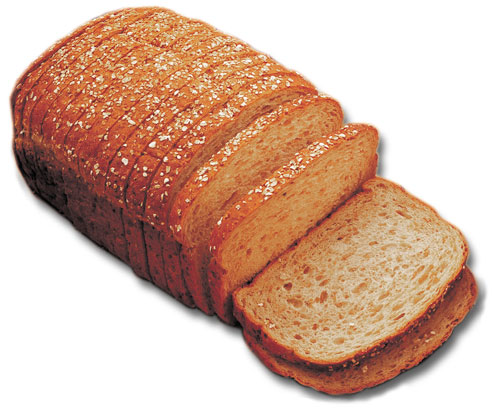
Least desirable - high glycemic index foods (70 and above): White bread-95, puffed rice cereals -90, instant mashed potatoes-86, white rice-72, honey-91, jelly beans-80.
Intermediate - moderate glycemic index foods (56-69): Rye bread-65, new potatoes-58, brown rice-66, refined sugar-65, oatmeal cookies-57, pineapple-66, banana-61.
Most desirable - low glycemic index (55 and below): Pumpernickel bread-41, heavy mixed grain bread-30-45, oatmeal-53, fructose-22, yogurt-33, orange-43, apple-36, strawberries-32, peach-28, lentils-28, barley-22, pasta-38, baked beans-43, kidney beans-33.
Posted in Nutrition | No Comments »
January 6th, 2008 Milan
Fiber
Dietary fiber is a special type of complex carbohydrate, found only in plants. the most healthful source of fiber are the bran of whole grains, the stems and leafs of vegetables, and fruits, seeds, and nuts. Although there are many types of fiber, they all belong to two broad categories, soluble and insoluble. Both are important for health, but soluble fiber has special benefits for the metabolism: it slows the absorption of other carbohydrates so that blood sugar levels rise more gently, and it helps lower LDL (”bad”) cholesterol levels. Even without these benefits, insoluble fiber is a healthy beneficial because it increases water content of feces, making the stool bulkier and easier to eliminate, it helps promote intestinal health by reducing the risk of hemorrhoids.
Numerous health studies found also that dietary fiber reduces risk of hearth disease, high intake of fiber helps control diabetes, and it can also lower blood insulin levels, in fact, studies in men and women from around the world confirm that dietary fiber is important for cardiovascular, metabolic, and intestinal health.
Best sources of dietary fiber:
Dried Figs - 6 pieces -19 grams of fiber - 255 calories
All bran cereals -1 oz -10 grams of fiber - 70 calories
Buckwheat -1 cup (cooked) -11 grams of fiber - 340 calories
Whole rye - 1 cup (cooked) - 11 grams of fiber - 314 calories
Whole wheat - 1 cup (cooked) - 10 grams of fiber - 400 calories
Baked beans - 1/2 cup (cooked) - 9 grams of fiber - 155 calories
Kidney beans - 1/2 cup (cooked) - 7 grams of fiber - 110 calories
Kale - 3 1/2 oz - 6 grams of fiber - 50 calories
Choosing your carbohydrates
It is important to reduce your intake of simple sugars and to increase your consumption of complex carbohydrates and fiber. But to make the best choice you need another piece of information called glycemic index. It is the measure of how quickly a food raises the blood sugar. Rapid raises in blood sugar call fourth large amounts of insulin, and high level of insulin seem to lower (good) HDL cholesterol and raise the risk of hearth disease. Foods with a low glycemic index raise the blood sugar slowly and are the most desirable carbohydrates. In general, they are also rich in complex carbohydrates and dietary fiber.
Here is the example of the least desirable high glycemic index (70 and above) foods: French white bread, puffed rice, corn flakes, cheerios cereals, candy - such as snickers and twix, instant mashed potatoes, white rice, honey, jelly beans, life savers.
Here is example of the most desirable low glycemic index (55 and below) foods: Pumpernickel bread, heavy mixed grain bread, oatmeal, yams, yogurt, orange , apple, strawberries, baked beans, pasta, chick peas, lentils, barley.
Posted in Nutrition | No Comments »
January 4th, 2008 Milan
Carbohydrates are essential for health. They are a vital source of the energy that fuels the body’s metabolism.
Plants are the major dietary source of carbohydrates. The only important carbohydrates that originate from animal sources are lactose in milk and the modest amount of glycogen in meat, poultry, and liver.
Dietary carbohydrates come in three varieties: simple carbohydrates, complex carbohydrates, and fiber.
Despite many important differences, simple and complex carbohydrates all have the same energy value - four calories per gram. Carbohydrates are less calorie dens than alcohol (seven calories per gram) or fat (nine calories per gram). Because fiber is indigestible it has no caloric value, but it certainly has lots of health value.
Carbohydrates in foods
Simple sugars: The least desirable are the simple sugars. They are absorbed quickly and they are empty calories, lacking other nutrients. Sugars are everywhere - sugar-coated cereals, candy, soda (the average soft drink contains ten teaspoons of added sugar). All these foods are full of simple sugars, high in calories, and low in nutrients.
You should limit your consumption of simple sugars to less than 10 percent of your total caloric intake. “Natural” or “brown” sugar is no better than ordinary white table sugar.
Complex carbohydrates: Because complex carbohydrates must be broken down into simple sugars before they are absorbed, they raise the blood sugar slowly. That alone makes them much better nutritionally than simple sugars, and when they are present in unrefined foods, they are accompanied by vitamins, minerals, and other valuable nutrients. Unfortunately, complex carbohydrates have gotten a bad reputation in today’s world, especially in countries that have plenty of “everything”, such as America. Since starchy foods are plentiful and abundant, beans, noodles, whole grain breads, and legumes are staples in the developing world but are often scorned in affluent societies.
From a health viewpoint, we have it backward. Starchy foods are actually less fattening than foods high in sugar or fat, and they are much more nutritious. If you succeed in reducing your consumption of simple sugars to 10 percent of your day’s calories, make up the difference by increasing your complex carbohydrates to 45 to 55 percent.
Posted in Nutrition | No Comments »
January 1st, 2008 Milan
I came home kind of late today and little tired. But I decided, that I needed to do some kind of workout to do something good for my body and to feel good. I wok out pretty consistently, so even if I don’t feel great, I still do it and reward usually is - I feel great. It was dark outside and weather not very nice, little vet.
Here is what I did : I vent for a 35 minutes run : I warmed up for 10 minutes, medium intensive run than did some intervals - pyramid interval :
1 minute sprint/1 minute easy
2 minutes fast run/ 2 minutes easy
3 minutes fast run/ 2 minutes easy
2 minutes fast run/ 1 minutes easy
1 minute sprint
Than I finished the run with 10 minutes medium intensive run, gradually slowing down and stopping.
If you don’t have a time to go to gym and you have about 35 minutes time available, try this excellent, highly effective endurance workout.
Posted in Workout plan | No Comments »