February 7th, 2008 Milan
Don’t go too long without eating, it will make you feel tired.
Small, healthy snacks or mini meals that include protein and carbohydrates will help keep your energy levels high throughout the day, and they take little time to prepare:
- Sliced apple with 1 tablespoon of peanut butter
- 1/2 cup of low-fat cottage cheese with banana or peach
- A hard-boiled egg with apple
- 1/4 cup of hummus and 1 cup of baby carrots
- Half a peanut butter and banana sandwich (1 tablespoon peanut butter)
- Baked sweet potato with 1/2 cup of low-fat cottage cheese
- 1/3 cup of almonds and 1/3 cup of dried apricots
Posted in Nutrition | 1 Comment »
February 5th, 2008 Milan
The ideal weight loss solution varies from person to person, but there are two fundamental rules all people trying to lose weight should know:
- 1. Five hundred calories per day equals 1 pound per week
All it takes is a calorie deficit each day. The rule to remember is this: A calorie deficit of 500 calories per day will produce a 1 pound weight loss after 7 days.
3500 calories = 1 pound
This can be achieved from calorie restriction, more exercise or, the best - combination of the two.
- 2. Replace fat with fiber
Fats and oils provide 9kcal/gram (kcal=kilo calories)
Alcohol provides 7 kcal/gram
Carbohydrates and protein provide 4 kcal/gram
Fiber provides no calories
The easiest way to eliminate calories is to reduce the amount of fats and oils in each meal. In addition to reducing fats and oils, increase fiber intake. Most people will find that they feel just as full despite consuming fewer calories. If they stick with it long enoug, they’ll not only lose weight but improove their health as well.
Don’t ignore exercise
Dieting is very efficient for weight loss, but it won’t improve your aerobic capacity, increase bone density, or generate the overall invigorating feeling that exercise provides.
Posted in Weight loss | 1 Comment »
February 2nd, 2008 Milan

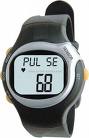
Step 1. Calculate your maximum heart rate.
Your maximum heart rate is 220 minus your age. For example, if you are 50 years old, your maximum heart rate is 220 - 50 = 170 beats per minute
Step 2. Find your target heart-rate zone.
- Level 1, low-intensity, the target hearth-rate zone is 50 to 60 percent of your maximum hearth rate. Multiply your maximum heart rate by .5 and .6 to find your low-intensity zone
Example: 50 years old woman will count her low intensity zone this way:
Maximum hearth rate 220 - 50 = 170 beats per minute
Low intensity, target heart rate zone 50 to 60 percent 170 X 0.5 = 85 beats per minute, and 170 X 0.6 = 102, her low intensity target heart rate zone will be 85-102 beats per minute.
- Level 2, mid-intensity, your target heart rate zone is 60 to 70 percent of your maximum heart rate. Multiply your maximum heart rate by .6 and .7 to find your mid-intensity zone
- Level 3, high-intensity zone, your target heart rate zone is 70 to 90 percent of your maximum. Multiply your maximum heart rate by .7 and .9 to find your high-intensity zone
Other options
Perceived exertion
You can determine intensity of your exercise from Perceived Exertion Scale, which is designed to estimate the intensity of exercise based on how you feel as you are working out. It correlates well with the target heart-rate zone formula.
On the Perceived Exertion Scale:
- low-intensity level corresponds to 5 or 6, so if you walk as your workout, it should feel somewhat difficult
- mid-intensity level corresponds to 6 or 7, walking should feel difficult, but not extremely so
- high-intensity walking, running or any other cardiovascular exercise corresponds to levels 7 to 9, so high intensity cardiovascular exercise should feel somewhere between difficult and extremely difficult
Perceived exertion scale
1. Resting
2. Extremely easy
3. Easy
4. First feelings of exertion
5. Somewhat difficult
6. A bit more difficult
7. Difficult
8. Very difficult
9. Extremely difficult
10. Maximum exertion or “Can’t take it anymore”
Talk Test:
Is another easy way to gauge exercise intensity. By talking aloud as you walk (or run, bike), you can get a general idea of how hard you are working out.
For low-intensity walking, you should be able to carry on a conversation with a walking partner. Later, as you move to walks of greater intensity and duration, you may be able to speak only in snatches, or ultimately be able to get out only a word or two when you are working your hardest.
Posted in Calculating your target heath-rate zone | 1 Comment »