
If you are just starting to exercise, try walking first to ease into a routine. If you are overweight, or haven’t exercised for awhile, walking is an easy, small impact way to get fit. Running or walking a mile burns about 100 calories. Walking very slowly won’t make you super fit, but it’s a great […]
Archives for December 2007
Will lifting weights make woman body look muscle-bound and masculine?

No! Women I train gain about 9 percent of muscle mass, enough to make an enormous difference in their strength. But they loose a corresponding amount of fat – and since muscle is denser than fat, they become trimmer. They don’t complain about looking unfeminine. On the contrary, they are delighted with their slimmer figures. […]
Strength training – more benefits
Beside building muscles and increasing strength, strength training has more benefits: Halts bone loss – and restores bone Each year after menopause, a woman typically loses 1 percent of her bone mass – even more during the first five post menopausal years. Over time, she may develop osteoporosis, a condition in which bones become so […]
A closer look at bone
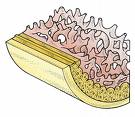
Your body contains over two hundred bones, joined by cartilage and ligaments. Together they form your skeleton, the framework that supports and protects your muscles and internal organs. When you touch your bones through soft skin, they feel as solid and unchanging as rock. But that’s just the outer shell. Underneath, bone tissue is porous […]
Lift weights, loose weight

If you want to loose weight, strength training with combination of cardiovascular exercise and flexibility exercises is the right way to do it . It not only helps take off pounds, it also trims and tightens. Here’s how to make it work: Adjust your food intake so you lose weight gradually, at a rate of […]
Physical fitness and arthritis
People who are physically active are healthier, happier, more productive, and live longer than people who are sedentary. Kate Lorig, R.N., Dr.P.H. in book “The arthritis help book, A tested self-management program for coping with arthritis and fibromyalgia” notes that this is true for everyone, including people with arthritis. Arthritis is one of the most […]