May 26th, 2008 Milan
Laird Hamilton is considered the greatest big wave surfer of all times. He knows how important it is for his profession and life to be in top physical shape.
Here are some fitness commandments from him:
1. I base everything on how I feel. Your body is the best instrument for reading how things affect you.
2. It’s really about keeping in shape for life. Think about your body like a car. Once you park a car, it might not start again. But if you just keep driving it, it’ll keep going. It likes to be driven.
3. If it’s potato chips in, it’s potato chips out. You eat garbage, you’re probably going to perform like garbage.
4. Vacation is an opportunity to get in a good routine. It’s like a mini-boot camp.
5. This is something I’m trying to learn: how to rest. Going full steam ahead all the time is not always the most productive approach, because then you’re always trying to play catch-up with recovery.
6. You have to go and try different stuff. The thing is, when you reach a certain level in any sport, you become so efficient at it that the effort level is really diminished. Your body has adapted. So what are you getting? Snowboarding has helped my surfing. Windsurfing has helped my surfing. Biking, for sure, has helped my surfing.
7. Above everything, sleep. I’m an eight-to-ten-guy. Not that I can’t operate with less, but for my overall well-being, I gotta have at least eight.

8. I have friends who eat healthier than anybody, but it takes them all day. And if they don’t have their sprouted bread, they go into seizure. I can eat a Big Mac. I’m not going to love it, but it won’t put me in toxic shock. It’s like if a car is too high-performance, then it’s sensitive to any kind of fuel. I like being more like a truck. If a little diesel gets in there, maybe a little water, it’ll cough and burp a bit, but it’s gonna get through it and keep running.
9. Chew more. That’ll probably do more for your ability to absorb nutrients from your food than just about anything.
10. It’s always more enjoyable to train with other people. It’s going to be more stimulating, but it also pushes you because you have accountability. You can’t just think, oh that was enough. Your partner will say, “That was only 29. I thought we were doing 30.”
11. Fear is an unbelievable motivator, but it also makes people freeze in their tracks. Once you start to understand it, fear becomes something you can tap into.
12. We are each our own greatest inhibitor. People don’t want to do new things if they thing they’re going to be bad at them or people are going to laugh at them. You have to be willing to subject yourself to failure, to be bed, to fall on your but and do it again, and try stuff that you’ve never done in order to be the best you can be.
13. In the end, if you’re still just there, doing it, you win.
Posted in Fitness | No Comments »
May 22nd, 2008 Milan
I bet you’re an oatmeal eater. It’s quick and easy to prepare, and its distinct nutritional makeup stabilizes blood sugar and satisfies your hunger. It’s the perfect power breakfast for the active women and men.
But there’s a difference between the sugar-laden sweet varieties and the fitness-friendly ones.
use these checklist to get the best box of oatmeal:
- Look for at least 3 grams of fiber per serving
- Make sure each serving (1/2 cup) isn’t more than 200 calories
- Check fat; there should be less than 3 grams
- Put back any variety with more than 300 mg sodium
Here are my oatmeal cooking instructions:
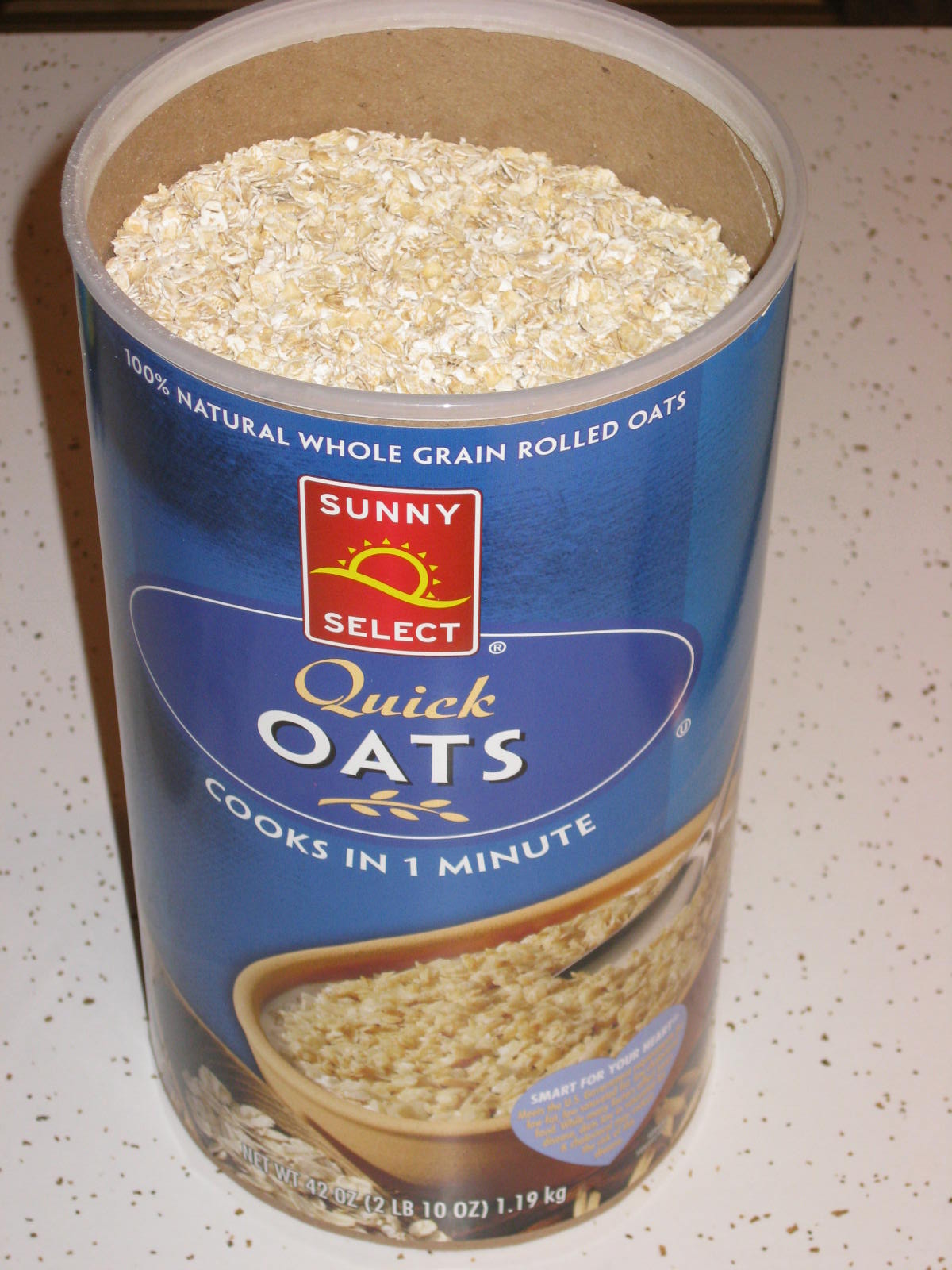
I put about 1 cup of 100% natural whole grain rolled oats:
- serving size - 1/2 cup
- dietary fiber per serving - 4 g
- calories per serving - 140
- sugars - 0 g
- total fat - 2.5 g
- saturated fat - 0.5 g
- sodium - 0 mg
to 350 ml of whole milk (you can use fat free milk),
and i I cook it for about 3 minutes.

I pour oatmeal on the plate and ad small pieces of bananas, walnuts and some chocolate on top of it.

This is quick, healthy and nutritious breakfast.
Posted in Nutrition | No Comments »
May 20th, 2008 Milan
Is your weight loss program right?
Here is my check list for you, to find out if you are on right track.
A desirable weight loss program:
- provides at least 1200 calories per day for normal adults to meet their normal nutritional requirements
- includes balanced nutrition - foods acceptable to the dieter from the viewpoints of sociocultural background, usual habits, taste, cost, and ease in acquisition and preparation
- provides a negative calorie balance (not to exceed 500 to 1000 calories per day), resulting in gradual weight loss of no more than 2.2 pounds (1 kilogram) per week, without metabolic abnormalities
- eliminates dieting habits that contribute to improper nutrition
- includes an endurance exercise program of at least 3 sessions per week, 20 - 45 minutes per session, at a minimum of 60% of maximum heart rate
- Includes an resistance exercise program of at least 2 sessions per week, where all major muscle parts are exercised intensively - multi joint, core exercises to provide a muscle development
- provides for new eating and physical activity habits that can be continued for life to maintain the achieved lower body weight
Related articles:
Posted in Weight loss | No Comments »
May 20th, 2008 Milan
Core exercises - They are more effective at helping people reach their exercise goals. A core exercise must meet these two criteria:
- It should involve movement at two or more primary joints, they are also called multi joint exercises
- It should recruit one or more large muscle groups or areas (chest, shoulders, upper back, hips/thighs) with the synergistic help of one or more smaller muscle groups or areas (biceps, triceps, abdominals, calves, neck, forearms, lower back, shins). One core exercise can affect as many muscles or muscle groups as four to eight assistance exercises.
Posted in Weight training | No Comments »
May 15th, 2008 Milan
If your cardio workout looks like this:
Steady pace on treadmill:
- Walk briskly at 4.5 mph or jog at 6.0 mph for 30 minutes (RPE 6)
- Walk for 2 - 5 minutes at 3.5 mph (RPE 3) to cool down
Total time: 36 to 40 minutes.
You should mix it with some interval-cardio-workout:
Interval workout # 1:
- Warm up for 5 minutes at 3.5 mph (RPE 3-4)
- Sprint for 1 minute (7.0-9.0 mph) or walk briskly on a incline (4.0-4.5 mph; 7% incline) (RPE 7.5-9)
- Recover for 2 minutes at 3.5-4.0 mph (RPE 4-5)
- Cool down for 5 minutes at 3.3 mph (RPE 3-4)
Total time: 31 minutes.
Interval workout #2:
- Warm up for 5 minutes at 3.5 mph (RPE 4-5)
- Sprint for two minutes (6.5-8.0 mph) or walk briskly incline (4.0-4.5 mph; 7% incline (RPE 7-8)
- Recover for 2 minutes at 3.7-4.0 mph (RPE 4-5)
- Cool down for 5 minutes at 3.3 mph (RPE 3-4)
Total time: 38 minutes
Interval cardio training is a great way to add intensity to your workout and maintain it interesting and challenging.
You should not interval train more than 3 times per week.
Posted in Interval training | No Comments »
May 15th, 2008 Milan
Perceived exertion
You can determine intensity of your exercise from Perceived Exertion Scale, which is designed to estimate the intensity of exercise based on how you feel as you are working out. It correlates well with the target heart-rate zone formula.
On the Perceived Exertion Scale:
- low-intensity level corresponds to 5 or 6, so if you walk as your workout, it should feel somewhat difficult
- mid-intensity level corresponds to 6 or 7, walking should feel difficult, but not extremely so
- high-intensity walking, running or any other cardiovascular exercise corresponds to levels 7 to 9, so high intensity cardiovascular exercise should feel somewhere between difficult and extremely difficult
Perceived exertion scale
1. Resting
2. Extremely easy
3. Easy
4. First feelings of exertion
5. Somewhat difficult
6. A bit more difficult
7. Difficult
8. Very difficult
9. Extremely difficult
10. Maximum exertion or “Can’t take it anymore”
Posted in Interval training | No Comments »
May 12th, 2008 Milan
Some over the counter pain relievers are an effective way to combat the effects of overuse injuries caused by sports activities.
The majority of over the counter pain relievers sold in U.S. contain one of the following ingredients: acetaminophen, ibuprofen, or aspirin. At recommended doses, all three have about same effect on reducing pain.
For reducing pain and inflammation, only ibuprofen and aspirin are effective.
Aspirin (brand names: Anacin, Ascriptin, Bayer, Bufferin, Ecotrin, Excedrin)
- is most commonly used anti-inflammatory medication
- sport doctors recommend aspirin to reduce the pain and inflammation seen in the initial stages of most injuries
- aspirin is strong enough to reduce mild to moderate pain caused by inflammation like tendon inflammation, nerve inflammation
- first effects of aspirin are felt in 30 min, although its maximum benefits are experienced two hours after the dosage is taken
Aspirin has well known side effects like tendency to irritate the stomach lining; prolonged use may cause permanent kidney damage; some people are allergic to aspirin and others.
Ibuprofen (brand names: Advil, BayerSelect Ibuprofen, Midol IB, Motrin IB, Nuprin)
- is less irritating to stomach than aspirin
- is effective in controlling the pain and inflammation of sports injuries
- ibuprofen is a powerful drug, and only the amount necessary to reduce symptoms should be used
You should always ask your doctor before you use aspirin and ibuprofen!
Related articles:
Posted in Sports medicine | No Comments »
May 8th, 2008 Milan

For a long time, eggs were thought to increase heart disease risk because of their high cholesterol content. But researchers stopped blaming the dietary cholesterol as a culprit in heart disease, instead pointing to saturated fat.
Eggs:
- eggs are light on saturated fat (one egg contains less than 2 grams)
- American Hearth Association has OK’d up to 7 eggs per week for people on low-fat diets
- eggs are perfect protein source, containing all 8 essential amino acids
From Women’s Health and Wellness, 2003:
Eggs are near perfect, healthwise. They offer such good-for-you nutrients as protein, essential fatty acids, significant amounts of all vitamins except vitamin C, and a wide variety of minerals, including calcium, iron, and magnesium. Plus, research has shown that egg yolks contain lutein and zeaxanthin, two antioxidants that may reduce the risk of cataracts and macular degeneration, a condition that can cause blindness. Best of all, eggs are more versatile in the kitchen than five-star chef. If there is an egg in the fridge, you’ve got a meal - what could be more stylish than hat?
Related articles:
Posted in Nutrition | No Comments »
May 3rd, 2008 Milan
If you are not a competitive athlete who trains 2 - 3 times a day, meal with mixture of carbohydrate, protein, and fat is effective way to replace muscle glycogen after exercise. Although emphasis is usually placed on carbohydrates, in practical terms, consuming a balanced meal ensures the availability of all substrates for adequate recovery.
For athletes who are training 2-3 times a day or who do not have long periods of time to recover, however, immediate consumption of carbohydrate in the form of foods or supplements may be beneficial.
Data suggest that high - glycemic index foods consumed after exercise replenish glycogen faster than low - glycemic index foods.
Studies on glycogen repletion after complete depletion emphasized carbohydrate consumption immediately after exercise.
Related articles:
Posted in Nutrition | No Comments »
May 3rd, 2008 Milan
Glycogen is found in small amounts in human tissue as a temporary source of stored energy. It is not present to any large extend in the foods we eat. When the glucose from carbohydrates enters the muscles and liver, if it is not metabolized for energy, it is synthesized to form glycogen.
2/3 of the glycogen in the body is stored in skeletal muscles; the remaining 1/3 is stored in the liver.
The process of converting glucose to glycogen is called glycogenesis.
Posted in Nutrition | No Comments »